What is a one hit wonder? Well for our purposes this is an artist or group who only managed one entry in the UK top 40 singles chart. Excluded are collaborations such as Rod Stewart & Tina Turner (It Takes Two) because they have had success as solo artists. Then you get someone like Jonathan Richman who charted under his own name and with the Modern Lovers. I don’t feel there is enough difference there to justify them being separated, as similarly I don’t with Tubeway Army and Gary Numan.
In the late 60s to early 70s it was not uncommon for a ‘band’ to be created purely to record a song, and then given a name. These thrown together bands would then either record nothing else, or anything else they did didn’t have that same magic to make it a hit. We have one or two of those in part one. It was also not uncommon for a band to get a hit single when they were primarily an albums band.
What we will not be covering are the ‘novelty’ one-off hits of Joe Dolce, Clive Dunn, St. Winnifred’s School Choir etc. because some things are just better forgotten.
This list is all about the UK top 40. Although you could chart lower than that, 40 seems a reasonable benchmark as a hit. To put this into a wider context – if we were looking at the USA, Roxy Music could feature with Love Is The Drug, which was their only top 40 hit in America!
Anyway, here are the first selection I like. I hope you like some too!
Edison Lighthouse: Love Grows (Where My Rosemary Goes)(1970)
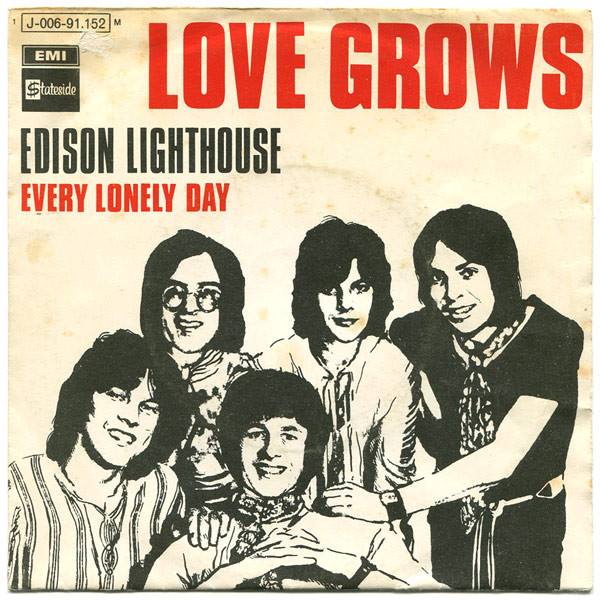
It was written by Tony Macaulay and Barry Mason who gave it to Tony Burrows (a session singer) to record along with other un-named session musicians. The easy listening catchy Bubblegum pop song rocketed up the UK charts and spent five weeks at number one. It even made an impact in America where it reached the dizzy heights of number 5!
This meant a band had to be assembled to ‘back’ Burrows on TOTP and a willing band called Greenfield Hammer were drafted in. Burrows at the time was having a great run with his recordings, also appearing on TOTP with Brotherhood Of Man (United We Stand) and White Plains (My Baby Loves Lovin’) over the same period! Burrows ‘left’ and the band carried on with sadly no further chart hits but Love Grows remains an irresistible guilty pleasure of mine. I am not claiming this is a great song, but there’s a simple unpretentious charm to it. It’s such a happy cheery sweet pop song, and there are times when you need that.
Many years later I discovered that one of my heroes, David Byron of Uriah Heep, had been one of those singers on cheap cover version albums (Hot Hits, Top Of The Pops etc.) which you used to see in Woolworths and the like. Byron worked for a company called Avenue Recordings and the bulk of his cover songs were subsequently re-released from 2012 onwards by Artistry Records. I think Byron’s version is just great so as a special treat you get two links to the song below – Edison Lighthouse’s original and the David Byron cover. Note that the intention was to record as exact a copy of the original as possible and Byron and the band nail it. A singer who also worked on those sessions was Elton John but he is not present on Love Grows unless it’s him on piano. It’s amusing because what we have is a session band, duplicating the work of a session band.
Watch Edison Lighthouse on TOTP
Listen to David Byron sing Love Grows
Hot Butter: Popcorn (Pye, 1972)
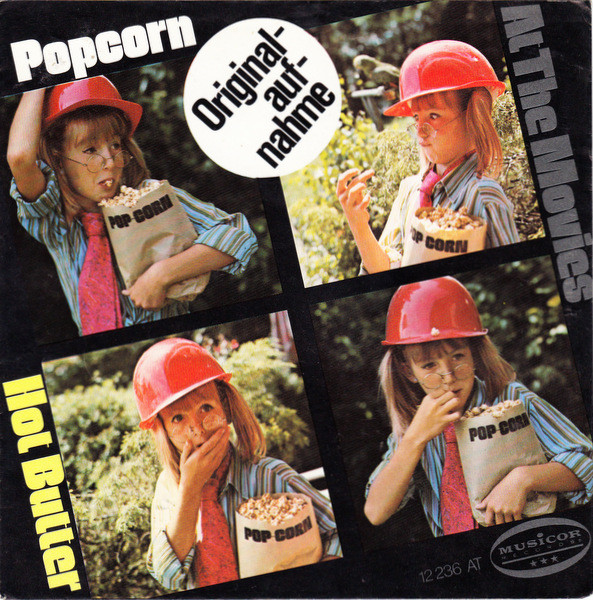
It was one of the big tunes of 1972 making it up to number 5 in the UK. Much more impressively it got to number 9 in the USA too, as well as charting high in every other country.
Popcorn was written by American Gershon Kingsley for his 1969 album Music To Moog By . In 1972, Kingsley recorded a rearranged version with his band First Moog Quartet. A big fan of the song was Jean-Michel Jarre who covered it in 1972 using the pseudonym Pop Corn Orchestra. He also later cited Popcorn as an inspiration for his big 1976 hit Oxygene (part IV). And you can kind of hear that if you imagine Popcorn slowed down.
But the big hit version was by Stan Free (also a member of the First Moog Quartet) when he released it, also in 1972, with his own band Hot Butter. Apart from Free on keyboards and Moog, the other members on the record are John Abbott ( guitar), Bill Jerome (percussion), Steve Jerome (electric piano), Tony Spinosa (percussion)and Dave Mullaney (ondioline). The ondioline, by the way, was a kind of electronic analogue synthesizer.
I love Popcorn and always have, but I have met people who hate it so I guess it’s one of those ‘marmite’ tunes. The popping corn melody on the Moog is catchy and the ondioline bubbling underneath sounds very futuristic. The drums always sound like they are slightly off the beat to me but it works brilliantly well. The key aspect of the song though is the killer ondioline bridge section which comes in at 1:09. It’s a great melody part and it takes the track to an unexpected high point – it’s way better than you would expect to come having heard the popping corn ‘verses’. I remember hearing it back then and it was the bridge which sold the track for me. When it goes back into the popping corn section again even that sounds somehow elevated. The outro where it slowly winds down is great too with a distant Kraftwerk style synth adding extra texture.
Popcorn was a surprise hit and was clearly a surprise too to Stan Free and the record label Pye, because there were no UK TOTP appearances to promote it. It was featured three times on the show – once with a Pan’s People dance routine, then with shots of the audience dancing and finally on the 1972 Christmas Show with a repeat of the Pan’s People routine. Sadly the footage has all been wiped despite a couple of Youtubers claiming to have it – what they have is a different older performance dubbed with Popcorn. It is however well worth watching for 70s nostalgia fans like me and you can visit its charms here. You will thank me for that eventually! Or you can see a French TV dance routine actually put together for Popcorn, but the routine is absolutely dreadful . . .
Indeep: Last Night A DJ Saved My Life (1982)
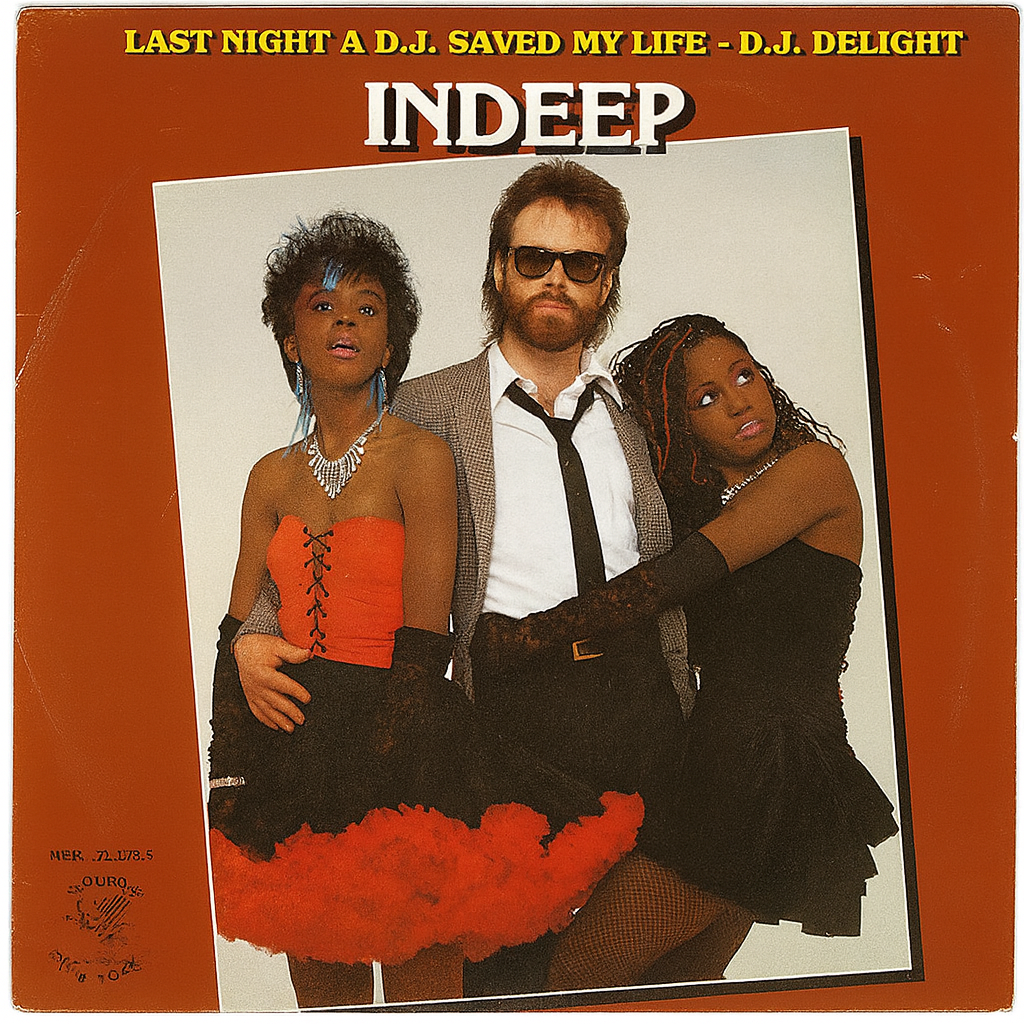
The immediate attraction for me is the overt Nile Rodgers of Chic style guitar groove. I would argue that the vocals aren’t far away from Chic’s Alfa Anderson and Luci Martin either. Put these two factors together, add in the pulsing bass groove, and it’s no wonder it went top twenty, reaching number 13. That doesn’t tell the whole tale though because it was a big radio song and still gets played today.
The New York based act was the project of Michael Cleveland who I am guessing performs the early Hip-Hop style bridge section. There are two female vocalists – Rejane Magloire and Rose Marie Ramsey. (Magloire you might also know later with Technotronic in 1991). They handle the vocals so so well, nailing the melody and giving the lyrics drama and a very palpable sense of relief that the DJ was there for them.
Another big fan of the song is Mariah Carey who covered it. Her version opens with the rap, performed by Fabolous who later interjects counterpoint vocals to Mariah. Mariah’s own vocal interpretation is more understated than the original and I think she could have done a lot better with it.
Althea & Donna: Up Town Top Ranking (1978)
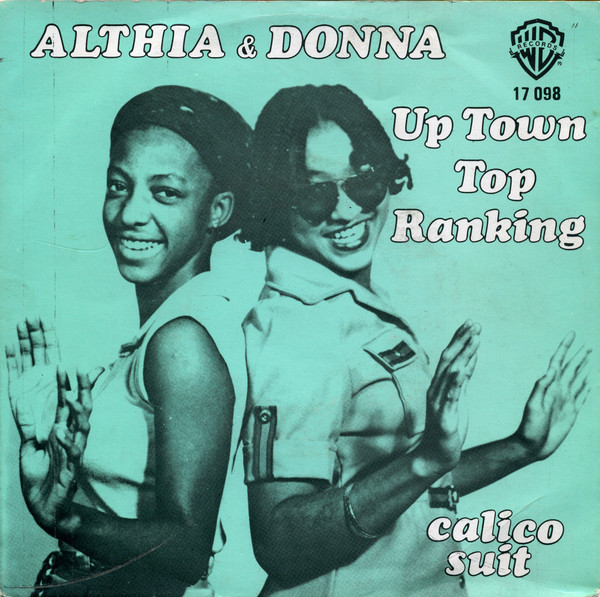
Althea (not Althia) Rose Forrest (17) and Donna Marie Reid (18) were one of the biggest surprise one-hit wonders because their song was first played on the radio by accident! The two were school friends who would often sing together on the streets of Kingston.
Jacob Miller (lead vocalist of Inner Circle) heard the pair on one of their street performances. He took them to see producer Joe Gibbs and they auditioned for him. Gibbs felt that the two of them and their song would be the perfect ‘answer’ to Trinity’s Three Piece Suit (1977).
They laid down the song, and on the other side was Calico Suit by the Mighty Two (who were Gibbs and Thompson). Late night Radio 1 DJ John Peel meant to play Calico Suit on his show but played Up Town Top Ranking instead by mistake. As was often the case with the Peel show he got numerous requests to hear it again. And as was also the case some of his fellow Radio 1 DJs from the daytime shows picked up on the song.
What makes the song so irresistible, apart from the catchy melody and Reggae beat, is the sparkling personality and obvious enthusiasm of the pair which shines through. In some ways I feel they were operating on the same wavelength as the later Spice Girls – this is us, this is what we do and think.
It caught the public imagination and apart from Janet Kay (Silly Games) I can’t think of another record by a female Reggae artist that did as strongly as this. I remember the lyrics were even transcribed and given an ‘explanation’ in the press!
Althea & Donna came to London and performed the song on Top Of The Pops (26 January 1978), which was repeated a week later. That first appearance might have been the final push to get them to number 1 for a week. They had been stalled at number 2 behind McCartney’s Mull Of Kintyre.
There were no more hits, but there was an album and four other singles. Up Town Top Ranking remains a popular song to this day. I have played it at two Reggae themed events in the last couple of years and both times it went down better even than the big Bob Marley songs.
Watch Althea & Donna on TOTP.
Simon Dupree & The Big Sound: Kites (1967)
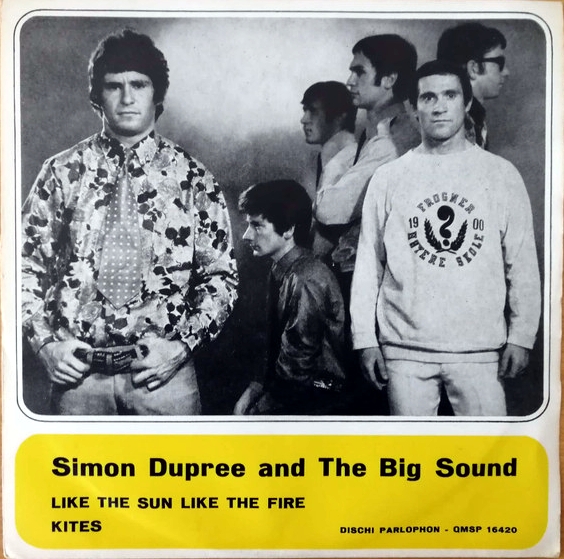
The Shulman brothers – Derek (vocals), Phil (vocals, saxophone, trumpet) and Ray (guitar, bass, violin, trumpet, vocals) played in bands from 1964. Names like The Road Runners and Howling Wolves give you an idea of the R&B/ Blues genres they were aiming at. In 1966 they changed their name to Simon Dupree & The Big Sound fitting in with the trend for bands with ‘& the’ names. Making up the rest of the band were Peter O’Flaherty (bass), Eric Hine (keyboards), and Tony Ransley (drums). Derek Shulman ‘became’ the star-man Simon Dupree for PR purposes.
They signed to EMI but singles success was elusive until their manager John King decided it was time to catch the psychedelic music wave and record a version of Kites, which had been recorded originally by The Rooftop Singers. The band hated the song apparently but had little choice but to go along with recording it.
It’s to their credit that they turned in such a strong performance on what, for me, is one of the great 60s pop singles. A beautiful slice of reflective sad psychedelic whimsy that I still love. The song features a wind machine (for effects)as well as liberal use of a mellotron and vibraphone. The Eastern tinged melody line is very attractive and it suggested a unique bridge to the song. We get a beguiling spoken interlude in Chinese, by the Chinese-Trinidadian actress Jacqui Chan. The spoken words, in Mandarin, translate as: ‘I love you, I love you, My love is very strong. It flies high like a kite before the wind, Please do not let go of the string.’ Wise words indeed.
Kites reached number 8 in the UK singles chart in December 1967 and the song remains a staple inclusion of psychedelic compilations. Nothing else they recorded came as close to being a hit, although For Whom The Bell Tolls stalled at 43.
Unlike bands such as Status Quo who abandoned psychedelia for an R&B Blues sound, the Shulmans had more surprising plans in store. By 1970 they, along with latest drummer Martin Smith, reconfigured themselves as the prog rock band Gentle Giant. Some of that whimsy from Kites is here and there on the Giant albums, but now on their own terms.
Mr. Bloe: Grooving With Mr. Bloe (1970)
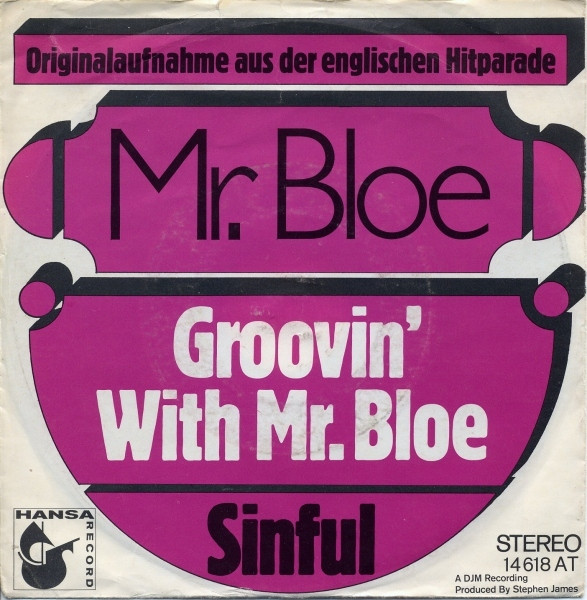
Stephen James of music publishers Dick James Music heard this instrumental by chance when Radio 1 played it by accident. The unmentioned DJ was supposed to be playing the A-Side Make Believe by the American band Wind. James recognised its potential and set about recording it with UK session musicians.
One of those who tried out for it but whose efforts were rejected was Elton John. Instead Zack Laurence played piano along-side Russ Stableford (bass), Roger Pope (drums), Caleb Quaye & Ian Duck (guitars) and Harry Pitch (harmonica).
The pre-Glam Rock intro shows the debt to Tommy James & The Shondells’ Mony Mony with its handclapping stomp. Co-writer of the song, Kenny Laguna, played keyboards with the Shondells so it was clearly his idea. The stomp returns again later in the song which is fine by this aged Glam fan. The main part of the song is a thoroughly delicious easy groove centred around Laurence’s piano. Pitch’s harmonica weaves around him and almost acts as what could have been a vocal melody at times. Standing out in this wonderful arrangement is Stableford’s bass part which bubbles and pulses loud out of it all. His high notes are a joy and the locked in rocking rhythm with Pope is equally fabulous.
There was a self-title album, believe it or not, but nothing on it compares or comes close to this gem. It was a hit all over Europe and reached number 2 on the UK chart. The original version by Wind which started things off was re-released under the band name Cool Heat and got to 89 in America.
Trivia note: Stableford also played the great bass part (check the intro) on Love Affair’s Everlasting Love and later joined The Muppets band. Pitch played the harmonica part on the theme to Last Of The Summer Wine!
Watch a Dutch TV performance of the (edited) song.
Joan Jett: I Love Rock ‘n Roll (1982)
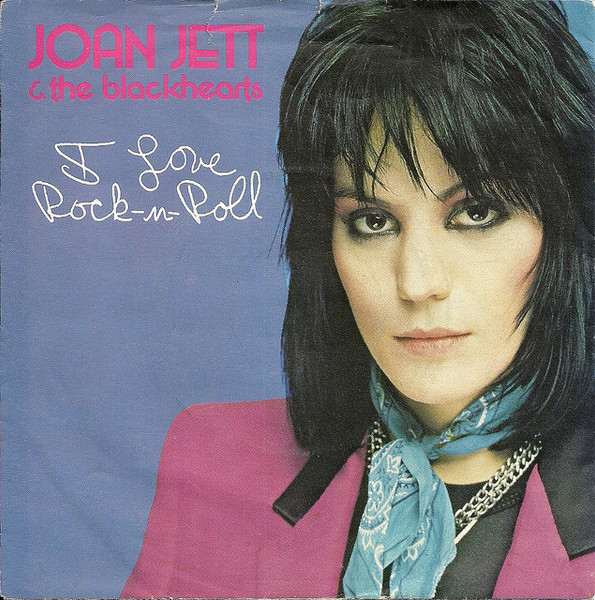
The former Runaways rhythm guitarist/ vocalist had her biggest hit with this Glam Rock classic. It was number 1 in America (and many other countries) and got to number 4 in the UK. It was her only top 40 entry here and she deserved better than that, but what an almighty classic it is!
It was originally released by The Arrows in 1975 with co-writer Alan Merrill claiming it was a response to the Stones’ It’s Only Rock ‘N’ Roll. Glam Rock afficionado Joan saw them perform it on their teatime TV UK show Arrows in 1976 while The Runaways were touring the UK. The original intention was for them to record it in 1977 but this plan fizzled out despite them having run through it at rehearsals. But Joan kept it in mind.
Following the break up of The Runaways she recorded her first solo version of the song in 1979. That was put out as the B-side to another cover, Lesley Gore’s You Don’t Own Me, which seems baffling at first. It’s a really good version but closer to The Arrows take with the bouncing rhythm. Joan is less demonstrative here – note her ‘me’ vocal for example – much less in your face. The guitars are great though except the solo which lacks impact. Overall this version is a little looser, less refined and yet more glam which works well enough. Oh and the rest of the band on it are no less than Steve Jones and Paul Cook of The Sex Pistols!
It was her second attempt, this time with her new backing band The Blackhearts, which became a mega hit, in part thanks to the raw black and white promo video’s rotation play on MTV. Joan’s vocals are so commanding and sassy and you always have to love her rhythm guitar work. The song is transformed into a scorching riff driven monster and it has the hooks, the solo and the production which all go to making it the killer pop/rock tune it is.
It was released in January 1982 in the USA and April in other countries. It hit number one in many countries, including the USA. It ‘only’ got to number 4 in the UK but it deserved to go number 1 in my opinion. The two weeks it spent at number 4 – the number one records were Ebony And Ivory and then the Eurovision winner Nicole with A Little Peace.
Watch Joan performing I Love Rock ‘N’ Roll on Dutch TV Top Pop.
The Rezillos: Top Of The Pops (Sire, 1978)
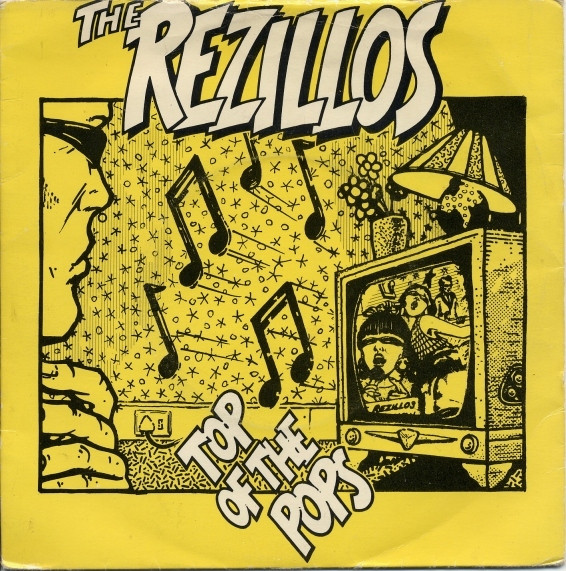
You can easily understand why Radio 1 would pick up on a song about the acts appearing on their flagship TV music show. The Rezillos were a fun and frothy band from Edinburgh – broadly I guess in the Punk/ New Wave genres, though I think this (as with The Stranglers too) was more a marriage of genre convenience.
In fact they were there right at the beginning of the Punk/ New Wave era as they formed in 1976. There was though little hint of the angst and anger that ran through other bands’ work, which, along with the vocals in their Scottish accents (no Americanisations) helped their appeal. Amusingly their biggest concession to Punk tropes was their recording of Fleetwood Mac’s Somebody’s Gonna Get Their Head Kicked In Tonight. Mac had released it as a B-Side under the alias Earl Vince & The Valiants.
The two Rezillos vocalists were Eugene Reynolds and Fay Fife. Alan Forbes is Reynolds’ real name – he took his alias from someone he met on a summer job! Fife’s real name is Sheilagh Hynd. She took her name as a pun on saying where she came from in her Scottish accent – ‘I’m fay Fife’.
Top Of The Pops was their only hit, reaching number 17, and it deserved to do better than that. They were a classy fizzing pop band and equally they had more than enough style and good songs to have had more hits. Rounding out the band at this time were the equally bogus named Angel Paterson (drums), Simon Templar (bass) and the un-bogus Jo Callis (guitar). The latter went on to join The Human League prior to their Dare album, co-writing the huge songs that he knew he had in him.
A great way to hear this lively endearing song, which always puts a smile on my face, is their Top Of The Pops performance. They appeared twice (different performances) in August 1978 but I imagine they are very similar. The lighting doesn’t work well, with lots of shadows for the band and their miming is off (hilariously so for drummer Angel Paterson). But Fay Fife just kills it in her performance. The camera can barely keep off her and no wonder.