The impact of appearing on this weekly UK singles chart show (Thursday night in the old days) was huge. It could make or break a band with the general viewing public. There are many many more but here are eight bands/ artists for whom their TOTP debut appearance made a big difference – in one case decades later. Now the crucial point here is actually appearing on the show in person. Later on it would be common to see a band appear on video, especially non-UK bands, but seeing a band with the TOTP audience made things much more dynamic and real.
All the dates listed are for the Thursday night transmissions.
Pink Floyd: See Emily Play (1967)
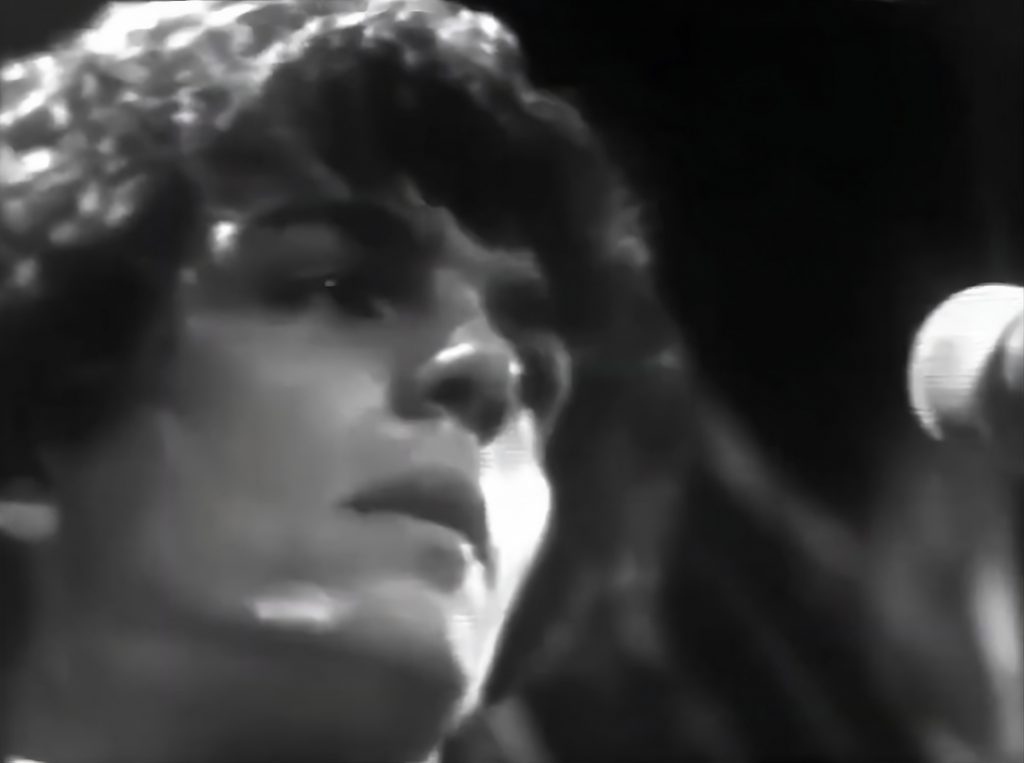
Their first appearance, on 6 July 1967, was with their second single, and still one of my all-time favourites, See Emily Play. This clip was thought to be lost but an off-air recording turned up in 2012, albeit with terrible screen rolling issues on the tape. So the video quality is poor but hey this is Syd Barrett with the Floyd so we can cope. The other bonus is that although the backing track is mimed to the recorded version, Syd recorded a new vocal. So this is a scarce bonus indeed.
The best material in the early Floyd era all came from lead vocalist/ guitarist Syd and this is one of the relatively few chances to see them with him, and they are playing one of his very best songs. That alone makes this an invaluable rediscovery. It opens with the end of an excitable introduction from DJ Alan Freeman. It reached number 6 on the UK chart and could have been the beginning of an interesting period for Floyd. But Syd was fast heading for his breakdown and the follow-up singles didn’t catch the public’s attention anywhere near as much as Emily. Floyd never appeared on TOTP again, a video was used for every performance when they were next scheduled. That was in November 1979 with Another Brick In The Wall which reached number 1.
Watch them play See Emily Play.
Black Sabbath: Paranoid (1970)
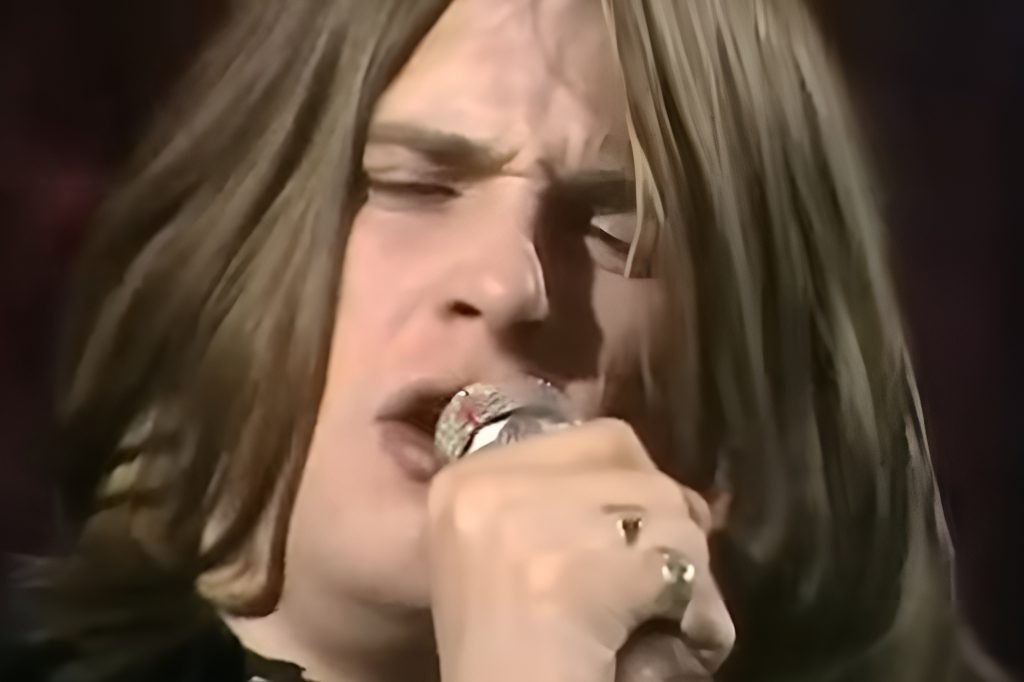
They appeared to promote Paranoid on 24 September 1970. The last track written and recorded for the album of the same name had been picked out as the single. TOTP had closed the show on the 17th with the audience dancing to the song, which was at 28 in the charts.
Now, on the 24th, they were at 19 and in the studio. While that appearance did the business and sent the song hurtling up to number 8 the following week and then to its peak of number 4, it did prove a bit of a problem for the band. The exposure brought new ‘teeny’ fans to the gigs expecting more pop-tastic hits like Paranoid, which was not what Sabbath were about!
Yet the song grew to be one of the two or three biggest songs in their live set, usually in the encore. And that’s interesting because it’s arguably not even one of their best songs, but it does have a resonance and impact that’s transcended the Sabbath fanbase. It’s one of the few Sabbath songs that is widely known.
The TOTP recording is dominated by shots of Ozzy although it does open (obviously) with a brief glimpse of a very cheerful looking Tony Iommi and a pan down to him playing the riff and we do get a nice shot of the band looking across from the side of Bill Ward and his kit. The others then get picked up by the cameras in the pauses between Ozzy’s lines. There’s a couple of nice shots for instance of Geezer’s flying fingers on his bass. Best of all is the footage of Tony’s solo and then the jump cuts after it between his hands and Geezer’s on the riff.
The audience are all in front of Sabbath and there’s some great footwork going on. Best of all is the guy in the turquoise shirt right in front of Ozzy. This guy is really in the zone – dig it?!
For Black Sabbath there were no more singles to promote on TOTP until Never Say Die in 1978. Singles were released in the interim but never had much traction. That likely suited them well but I wonder what might have happened if Paranoid had been followed say by Iron Man as a single?
Uriah Heep: The Wizard (1972)
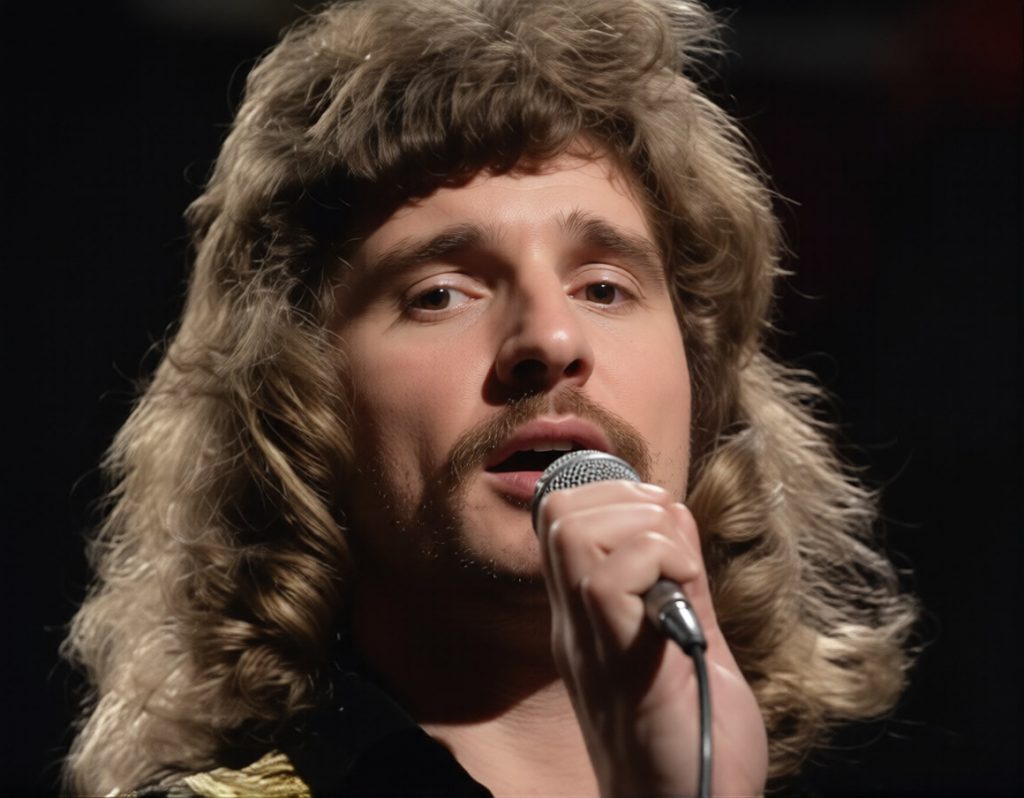
The beauty of TOTP was that unexpected bands would get on from my ‘tree-house gang’. You couldn’t always understand how and why this had happened but it was good to see them. The biggest case in point here is Uriah Heep, who appeared on 16 March promoting their new single The Wizard. Unusually for TOTP it didn’t send the song up the charts – in fact it didn’t chart at all! So for Uriah Heep opportunity had not knocked!
Yet the song is absolutely terrific, still one I love to play a lot. A hippy peace and love song sung as impeccably as ever by David Byron. It’s nice to see Ken Hensley playing the opening acoustic guitar part because it’s easy to assume Mick Box plays most of the guitar parts but this is not so. The camera then switches to Byron and then pans out for the always entertaining audience glimpses. In this era they still picked out some of the audience, nearly always girls, to dance behind or next to the band. This is no exception and they look terrific, especially the girl in the black dress and white belt, to the rear and side of Byron, who is really getting into the song.
One issue they often had was where exactly to put the band and you got some odd decisions. Lead guitarist Mick Box seems to be absent at first but then the camera picks him up sat on a stool at the edge of the podium! Why sat down? Was he unwell?
One decision they had to make was who was going to mime the bridge vocals. These had originally been recorded by Mark Clarke who had been their bass player for a very short time but had sung lead on this section. Heep took the fairly obvious decision to use Ken Hensley for this as he had sang lead on some songs and was always present on backing vocals. Some nice full band shots follow as we head to the outro. We are so fortunate this film survives!
The Byron era was their peak really and videos of him with them are nowhere near as numerous as we would like. So while it didn’t break them as even a one-off hit single band it gained in value as great film of Heep with their talismanic original vocalist. Byron was born to perform and it was a sad day when he left the band in 1976. Even sadder when he died in 1985 as a consequence of the alcoholism that got him fired from Heep.
Alice Cooper: School’s Out (1972)
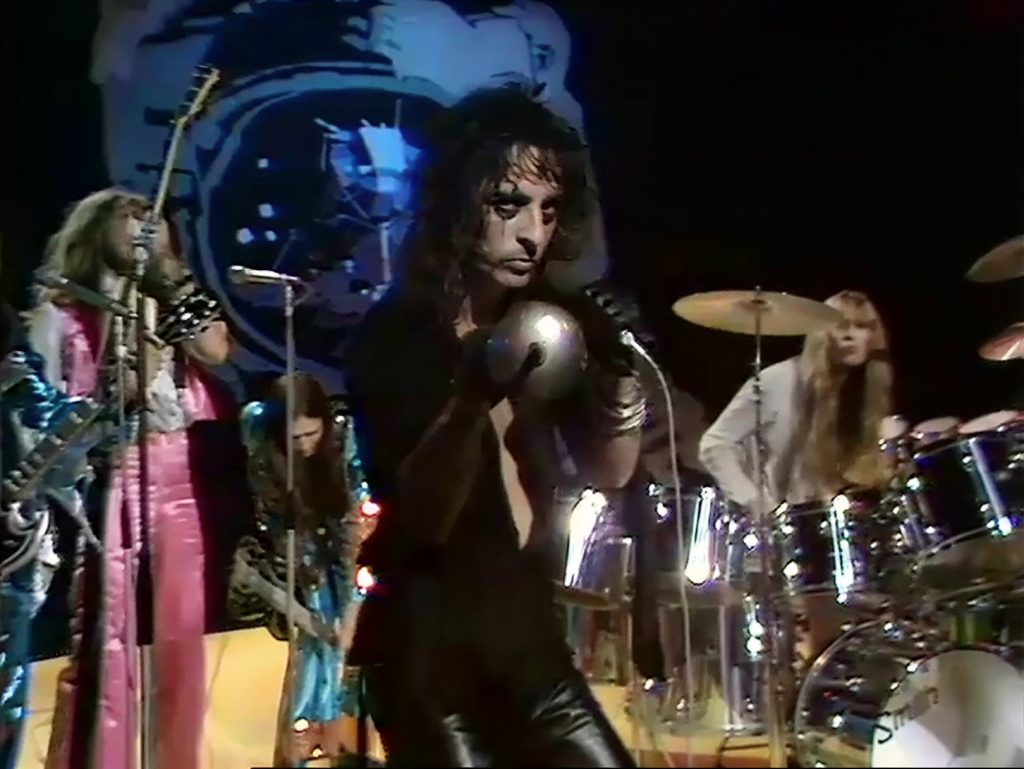
Although the Cooper Group had appeared on British TV in 1971, it was for the late night Old Grey Whistle Test. As wonderful as this was, it wasn’t going to reach the mass audience which TOTP commanded. Now, in 1972, they had a single with a killer riff and catchy melody plus the all-important radio play. That set them up for their TOTP debut on 13 July 1972.
They hold back from focussing on Alice. Instead we are zoomed in on a sparkly Dennis Dunaway (bass) who gets in one of his trademark kicks for good measure. It’s a slow pull-out then taking in Glen Buxton (lead guitar) and Neal Smith (drums). Then we see Alice at last and the audience ‘co-star’ in their performance This is the girl in the pink/purple top to Alice’s right. Just about visible behind her is Michael Bruce (rhythm guitar). Somebody hands Alice a red balloon which looks comically useless. As we hit the chorus pink/ purple top girl is really going for it now along with another girl to her left. Alice picks up the rapier to his left which he wisely uses instead of the balloon, although he later uses a cord instead which lowers the menace somewhat.
It’s great to see Michael stepped forward with Glen and Dennis from now on. I always like to see my boys as a band. As we head for the outro Alice starts working in pink/purple girl swaying in time with her, his arm round her shoulders. Who was she I wonder? She danced with such abandon and she is great with Alice.
The song was inevitably huge in summer 1972 (the school holidays) and hit number 1 in the UK. The video link is to the Christmas ’72 TOTP edition which repeated the original performance.
Watch the ACG play School’s Out.
Roxy Music: Virginia Plain (1972)
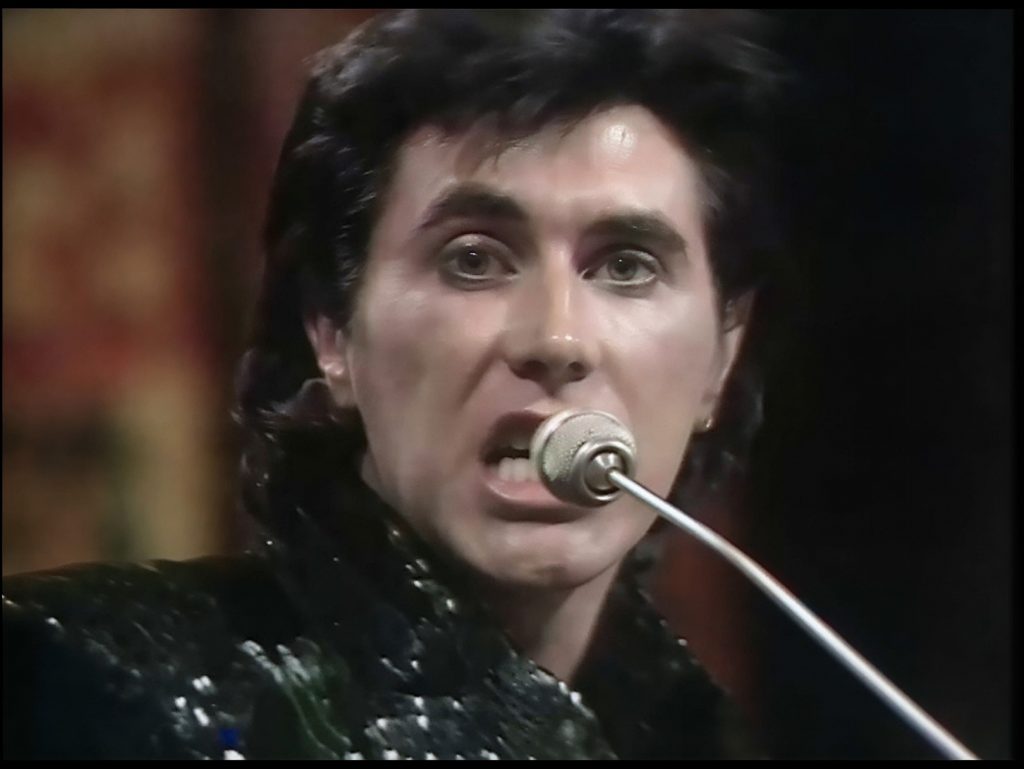
Roxy Music hit TOTP on 24 August 1972 in a pulsating riot of colours and style with a song which sounded new and different to anyone else. The final vision mix features the technicolour lens filters at times which were beloved of the show in this era. The actual band footage is heavy on Bryan Ferry, as he was the main focus as vocalist. As a consequence of that we miss seeing Phil Manzanera’s thrilling guitar slashes near the end, which surely deserved at least a few seconds of screen time.
It opens intelligently with Ferry’s fingers playing the intro piano. A quick band shot and we are back to Ferry, his face this time, and he is absolutely magnetic. So magnetic that the camera can’t seem to break away from him. We start circling slowly around him as though we are in orbit! At last we break for a band shot and you can pick out Andy Mackay getting in some soprano sax! But the camera drifts back along the line because we need more Bryan! I do love his shaky hands gesture as he sings ‘We are flying down to Rio.’
When Andy swaps to baritone sax for the next instrumental break we are again fortunate to see him. It’s now that we get those crazy psychedelic filters on the lens before we go, you guessed it, back to Bryan. Generally the band member who misses out due to the understandable Ferry focus is Brian Eno (synths, generator) who we rarely see much of.
It’s about 2:10 when they muff up the video and don’t go to Phil Manzanera. Bryan cues it up with his piano and Phil hits those great blasting chords. We do see him hit the first one briefly in the zoomed out shot but the guy needed a closeup! In fact we also miss Andy swaying in time with Phil’s bravura slashes, although we do see his feet swaying to be fair.
Another filter shot comes in (yellow) and it’s a great audience view and backs of the band. Hang on – there’s Phil and Andy knocking them dead if you look to the left! Just after this is a superb audience closeup with a girl on the left (in white and green) who looks really glum at being there. Makes me laugh every time.
The final moment of magic goes to Bryan with a wink direct to the camera at the end of the last line, ‘What’s her name, Virginia Plain.’
Virginia Plain was the first of many TOTP appearances for Roxy and also the solo Bryan Ferry. Sparked by this performance the song reached number 4 on the UK chart.
Watch them play Virginia Plain.
Sparks: This Town Aint Big Enough For Both Of Us (1974)
It remains one of the finest songs to reach its highest position of number 2. Ironically it was held off number 1 by the band who had replaced them when they were unable to make their original first planned appearance. Not having the permits in place to appear (due to Ron & Russell Mael being American) they were bounced off the show and The Rubettes were hastily booked to replace them. Their sugar candy irresistible slice of pop perfection Sugar Baby Love rocketed up to number 1.
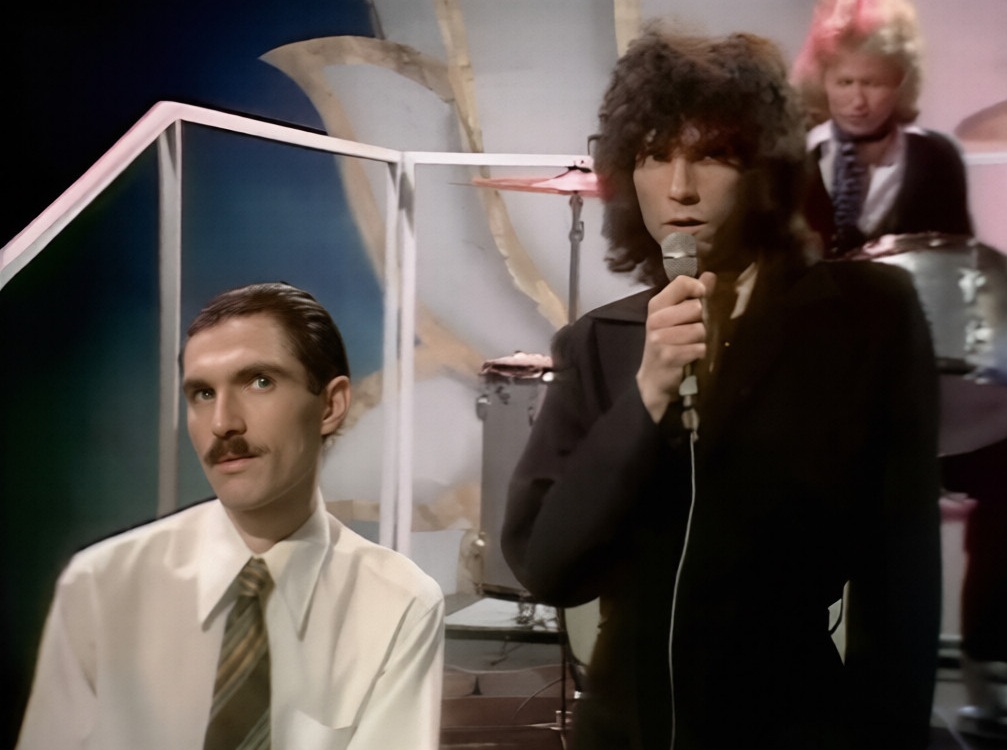
But when Sparks finally did make it onto the show, on 9 May 1974, they absolutely smashed it. The song is great, a Hollywood drama in four minutes or so – a breath-taking assault on the senses. And I think critically it had that catchy Bach style intro from Ron which built the tension and told you something very special was coming.
But the USP was brothers Ron and Russell Mael. Russell’s pouty cute looks and startling vocal range were one talking point and Ron’s moody mid-distance glances (or glares) plus his slicked back hair and Chaplinesque (or Hitleresque) moustache were another. Next day at school everybody was talking about Sparks and especially, ‘that guy on the keyboards’. There were of course three other guys on the show with them but you don’t see too much except for drummer Dinky Diamond who gets a closeup or two. Adrian Fisher is the guitarist but he doesn’t get the closeups he at times could have had.
That original performance in fact is lost but luckily they came back on TOTP, on 23 May 1974, and redid it. That’s the actual performance you see here (repeated on the Christmas show). The one big difference is that bassist Martin Gordon was fired within hours of the original transmission, so it’s his replacement, Ian Hampton, you see miming his parts. Missing but could have been there was second guitarist Trevor White. He had come into the band by this stage but was not allowed on the show as the group was set as five and TOTP wouldn’t budge and allow six.
Sparks’ relations with TOTP remained good, in part because they were good value for the show with their image but nothing else they did ever got close to the impact of that debut. First time around is I guess the charm.
Kate Bush: Wuthering Heights (1978)
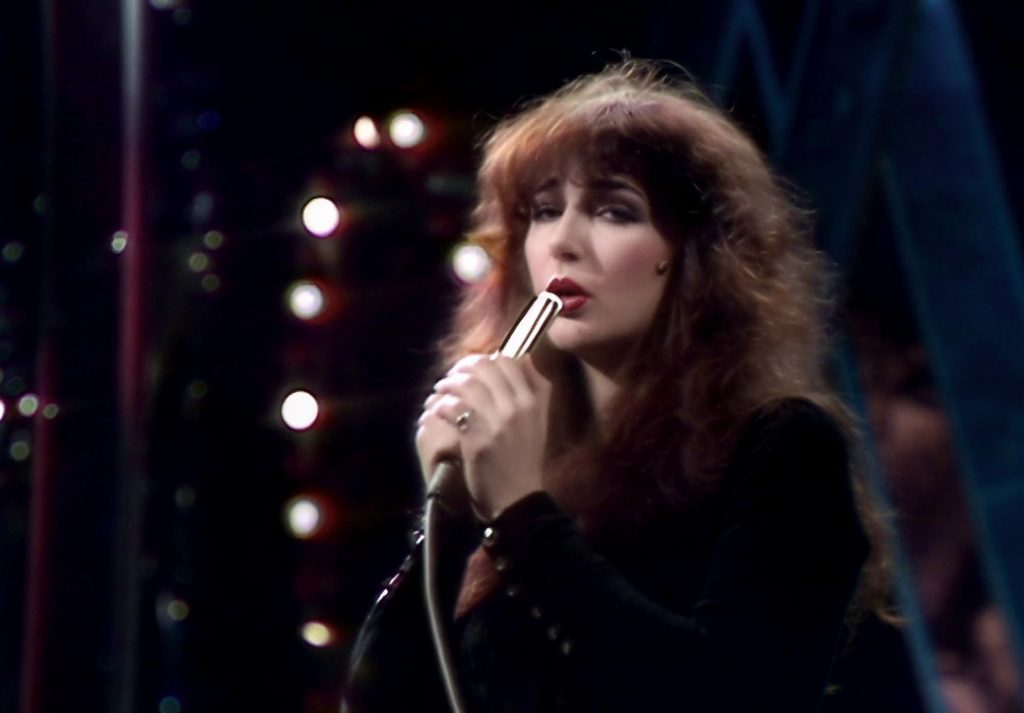
Kate first appeared on 16 February 1978. Watching it now, with hindsight, it’s hard to imagine that there were many at the time who felt this was destined to be one of those novelty ‘one hit wonder’ number 1 records. It was easy to pick fun at what was thought by some to be a kooky weird performer and her voice was particularly picked out for mild ridicule. Against that there was a huge and growing number who were completely sold on the Kate Bush experience. And what was also apparent was how many young women were touched and affected by Kate. Yes she picked up a lot of rock fans, especially those who were into Prog Rock, but that teenage to early 20s female fanbase was a significant added bonus. What Kate said, and how she put it across, connected to her audience.
But back here on her debut this was all new. We get a classic reverential introduction from David ‘Kid’ Jensen first and then off to Kate. She starts off sitting at front centre as the piano intro tinkles. She stays there for half the first verse and sings directly to the audience, with occasional glances to her left to the camera. It feels like we have stumbled into a private setting. She rises up on ‘How could you leave me’ and it’s then a question of how well she will sell the chorus.
There’s a change of emphasis now. The chorus is all to the camera and she uses her mime training and expressive face and voice to connect with the TV audience. It’s a very affecting performance. It’s a masterful build too. Verse two (‘Ooh it gets dark’) raises the emotional bar again, Kate swaying and waving. Maybe it’s those ‘wily windy moors’. As she reaches ‘I’m coming back love’ we get a riveting close-up of a fully impassioned Kate that you just can’t ignore. It’s just after this we get our first real studio audience shot but most seem to be watching for a camera heading towards Kate.
The tipping point of the song I think is the bridge (‘Ooh let me have it, let me grab your soul away’) which is the emotional core and hits a new plateau. Follow that with another chorus and you have a dream ending. We now finally see the audience in some close-up with Kate. They look either intrigued or baffled. Some half-heartedly try dancing to the rhythm track but even that’s a stretch. The zoom out to close is clever, it’s like a spectral memory fading into the distance.
I suspect Kate, who comes over as a perfectionist, wasn’t happy with the end result because she came back on 2 March and tried a different approach for the song. This time she used a piano as part of the performance. She seems even more sure of herself and it helps that by this time the audience (studio and at home) know the song and what she is about.
The TOTP performances certainly helped build her fanbase but Kate didn’t perform any of her subsequent singles on the show until 22 August 1985. To, by then, general surprise she actually appeared in the studio with Running Up That Hill.
Watch Kate sing Wuthering Heights.
Tubeway Army: Are ‘Friends’ Electric? (1979)
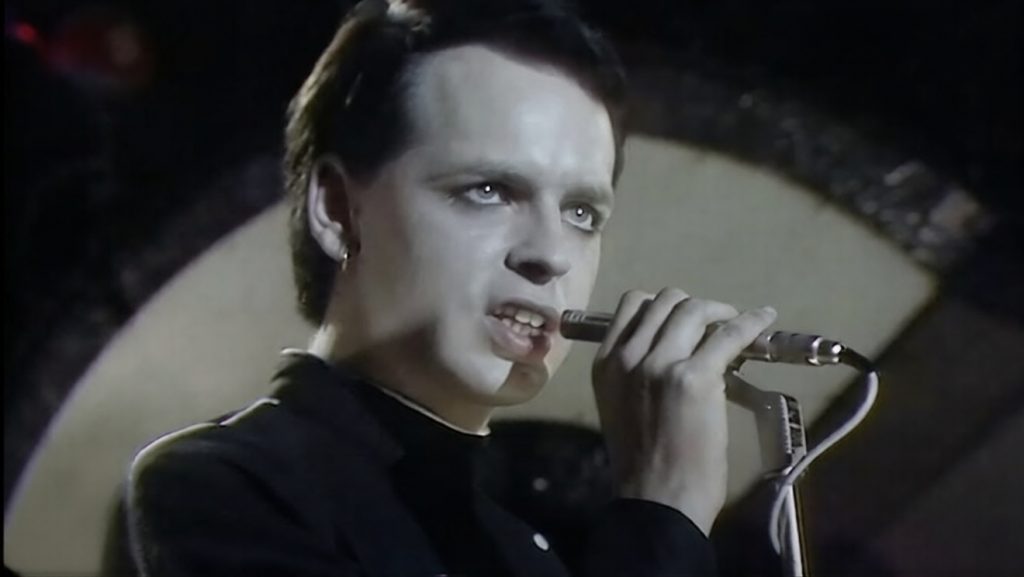
I saw this performance, transmitted 24 May 1979, in the BBC TV room at Duporth Holiday Camp at St. Austell, Cornwall. It was always fun watching TOTP with a large audience because you got the banter and comments. First impressions in the TV room were that we were watching a wannabe Bowie impersonator, big on his Berlin period. Maybe so to a degree, but Gary Numan (as the singer was) added a smart modern sheen to the sound.
The lighting design is also a key factor. That’s something you can never really say about TOTP. It is what it is, well lit and give it your best usually. But somebody – did Numan get involved here I wonder – had the intelligent idea of lighting it very subdued and moody, and this immensely helps the song’s effect.
Numan’s icy cool, almost deadpan, vocals are interesting and the music has two strong things going for it. The riff of the song is simple and memorable and the bridge section – where Numan intones ‘so now I’m alone . . .’ – has a spectacularly cool great synth melody. Numan also drops some of his sang-froid vocal edge and is almost human as he uses the camera in a warmer way.
The audience incidentally generally look absorbed, as they should be. You can even see some of them ‘jigging around’ a bit at times. That riff is, after all, nearly danceable!
An interesting aspect of this show was that David Bowie appeared on video performing Boys Keep Swinging. It was good, not great, not at the same peak of many of his singles. He left the Duporth TV room underwhelmed. There was a real sense of the old guard being replaced by the new (man), who had aced his performance.
By June 1979 Numan was officially a solo act, although all of Tubeway Army were retained as his band. His first ‘solo’ album, The Pleasure Principle, and another number 1 hit single Cars, followed in 1979.
In a 2014 interview with The Guardian, looking back on Are ‘Friends’ Electric?, Numan commented: ‘The lyrics came from short stories I’d written about what London would be like in 30 years. These machines – ‘friends’ – come to the door. They supply services of various kinds, but your neighbours never know what they really are since they look human. The one in the song is a prostitute, hence the inverted commas. It was released in May 1979 and sold a million copies. I had a No 1 single with a song about a robot prostitute and no-one knew.’
Proof, if needed, of the inherent strength of this song is just how brilliantly effective it was as a core part of The Sugababes’ terrific Freak Like Me.