‘The wall on which the prophets wrote
Is cracking at the seams
Upon the instruments of death
The sunlight brightly gleams’
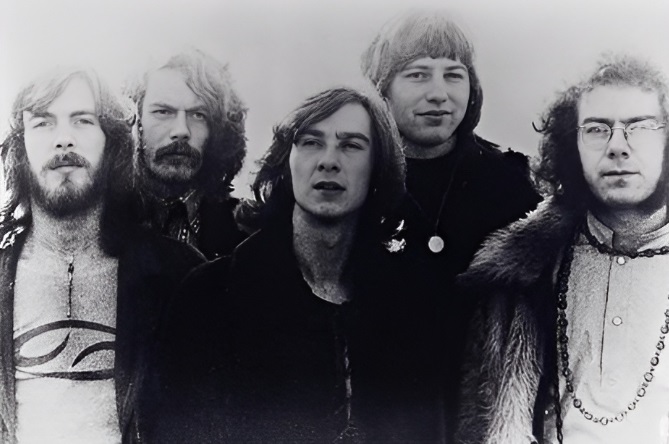
Robert Fripp: electric and acoustic guitars Ian McDonald: saxophones, flute, clarinet, mellotron, vibraphone, reed organ, piano, harpsichord, and co-lead vocals on I Talk To The Wind Greg Lake: lead vocals, bass, backing vocals Mike Giles: drums, timpani, vocals Pete Sinfield: lyrics
I don’t think Crimson ever bettered this magnificent album. Now that may seem controversial because there are other albums which could be cited – Red for example. But the original band, who really were King Crimson, only appeared in their entirety on this album. Although most (Ian McDonald being the exception) returned to some extent for the second album – In The Wake Of Poseidon.
After that it’s definitely Robert Fripp’s band. To zero in on it – it’s Ian McDonald’s writing and musical contributions on this debut which, for me, gives it the edge over the subsequent albums. Just check out his credits at the top of this piece! I feel a lot of the uniqueness and the quality on the album comes from him. He isn’t on Poseidon but he co-wrote (along with an uncredited Gustav Holst) the Devil’s Triangle on it – which is the best track. Spoiling things though he also co-wrote the Marmite like Catfood which has never impressed me.
Mike Giles is the other stand-out musician on Court Of. When I first heard the album I found his drumming confusing as no other drummer I listened to played anywhere near as busily as him. I hadn’t got the references or knowledge to make sense of his playing. He seems to be everywhere and I found his playing distracting. As my musical world-view grew I came to love his work which is integral to the album’s charm.
Greg Lake made his name as a vocalist with this album – it almost certainly opened the door to him for Emerson, Lake & Palmer, and he is quite stunning throughout. A mostly clean and clear vocal as befits his early years as a chorister but he proves he can mix it up with the biting vocals on Schizoid Man. His bass playing gets overlooked but he does a good job keeping up with Giles and let’s not forget he played bass on all the ELP albums so he must have been doing something right. Robert Fripp became the complete leader of the band after the breakup of this incarnation of Crimson. Fripp doesn’t dominate the sound at all on Court Of and in fact he would be easy to ignore or miss at times. That’s not to say his playing is never less than excellent but he doesn’t stand-out as much as he does on the later albums. Lyricist Pete Sinfield was credited as a band member which was then, and still is now, unusual. His lyrics are enigmatic and often verbose pieces heavy on the meaning and imagery. Lyrically the fluffiest song is perhaps his best, I Talk To The Wind is a pleasant break in the melancholy and tension which permeates the album.
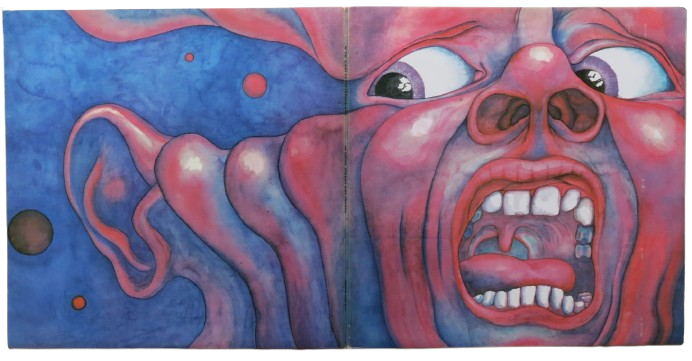
Back to the Crimson King, and you have to start with the packaging, based on two paintings by Barry Godber, the front being him looking in a mirror. The strong blue/ pink colour theme is appealing and links nicely with the Island Records pink label too! His work is extraordinary and completely captures the mood of the album. His front cover echoes Edvard Munch’s The Scream and perfectly chimes with the opening track – 21st Century Schizoid Man. It’s the hardest heaviest riff in the Crimson catalogue. The song is a monster and it’s hard to believe only four musicians are on it with the dizzying sound they get. Lake’s barked vocals ramp up the fear but what I find most memorable is Giles and his awesome performance on drums and percussion which keeps the song moving and exploding. The cool calm vibe of I Talk To The Wind which follows is a relief. It’s one of the oldest songs on the album, and you can find a sweet version with McDonald’s then girlfriend Judy Dyble singing it. Everything about this one is a delight – it’s got a pastoral quality and feel and the production is so soothing. The instrumental second half has some playful flute playing against Fripp’s warm guitar tones. McDonald gets to solo on the flute over the outro and it’s quite delightful. There’s not enough credit given to this song and that’s because it is overshadowed by the drama of the big three songs.
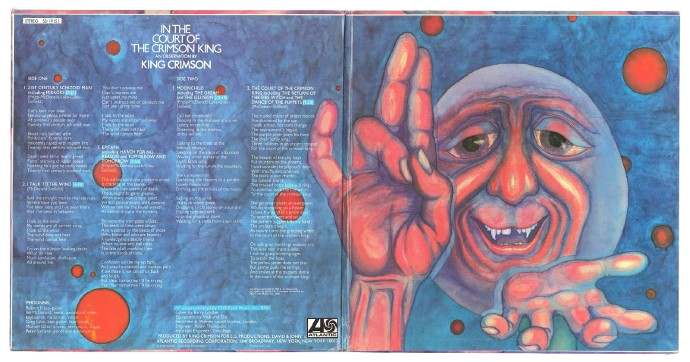
The epic end to side one is the mournful overwhelming Epitaph, a different kind of dread to Schizoid Man – this is all about resignation and futility, which Lake gets across supremely well. There’s big drum rolls into the riff from Fripp and the big mellotron strings part from McDonald. It’s massive but also a great exercise in restraint. Fripp gets some wonderful guitar parts in this, at times buried a little too much. McDonald’s woodwind is spinechilling when it comes in at 4:15, a really orchestral feel from so little.
Now things get a little more obscure. Side two has just two songs and the first one is challenging. Moonchild starts off as a gorgeous wistful ballad but after just two minutes and twenty seconds of actual song we get another ten minutes of quietly muted music. There’s little tune or melody at times and it’s very quiet. Giles’ percussion sounds suggest to me something like a naughty pixie running around at times. It’s a very curious piece of music which I have come to love over the decades. It’s better than is generally thought.
All this quietness is deceptive, especially if you have turned up your speakers to hear it better. If you have turned them up then the loud intro of the final track The Court Of The Crimson King comes as a surprise but a very welcome one! It’s a quite euphoric intro with everyone firing on all cylinders. McDonald’s mellotron strings are at their very best here. There’s a lovely cheerful sparkling bridge section at 2:19 with great keyboards and mellotron from McDonald and he’s then back for a flute solo at 4:14. The last part of the song is wave upon wave of the chorus melody and the ‘Ahhhh’ vocals. There are two named interludes – Return Of The Fire Witch is a delicate cymbals piece while Dance Of The Puppets is a cheery pipe organ led solo.
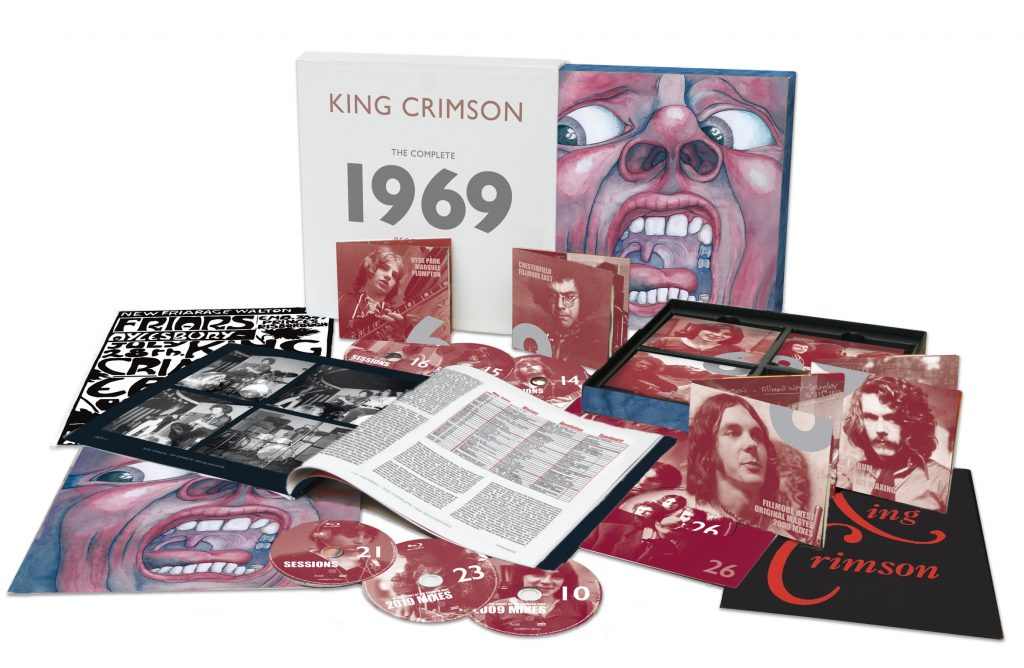
The Complete 1969 recordings set has almost everything you could want. There are some bits missing such as the coda to the album which appeared on some later vinyl pressings. But you get every existing live performance, the pre Crimson Giles, Giles & Fripp album. There’s also copious session takes and overdubs you can happily get lost in, but the highlights of the studio parts of the set are the following recordings:
Steven Wilson’s 5.1 mix is exactly what this album has deserved all along making it more immersive and expansive than ever. Then there is one out-take from the original sessions at Morgan Studios which were abandoned. This is an instrumental run-through of Schizoid Man and to be honest it sounds fine to me. I prefer the warmer sound to the Wessex Studios version and I think Giles’ drums sound bigger and more powerful. But the best outtake is a so-called duo version of I Talk To The Wind played by Fripp (on acoustic guitar) and McDonald (on flute). It’s a beautiful bucolic piece of work and especially shows off Fripp’s guitar playing. He overdubs a sweet melody lead line onto a backing track of him playing the chords. McDonald adds the whimsical flute lines that give it an airy feel.
We will return again to Crimson in the future but their debut is definitely the place to start.