‘She was a fast machine, she kept her motor clean
She was the best damn woman that I ever seen.
She had the sightless eyes, telling me no lies
Knocking me out with those American thighs.’
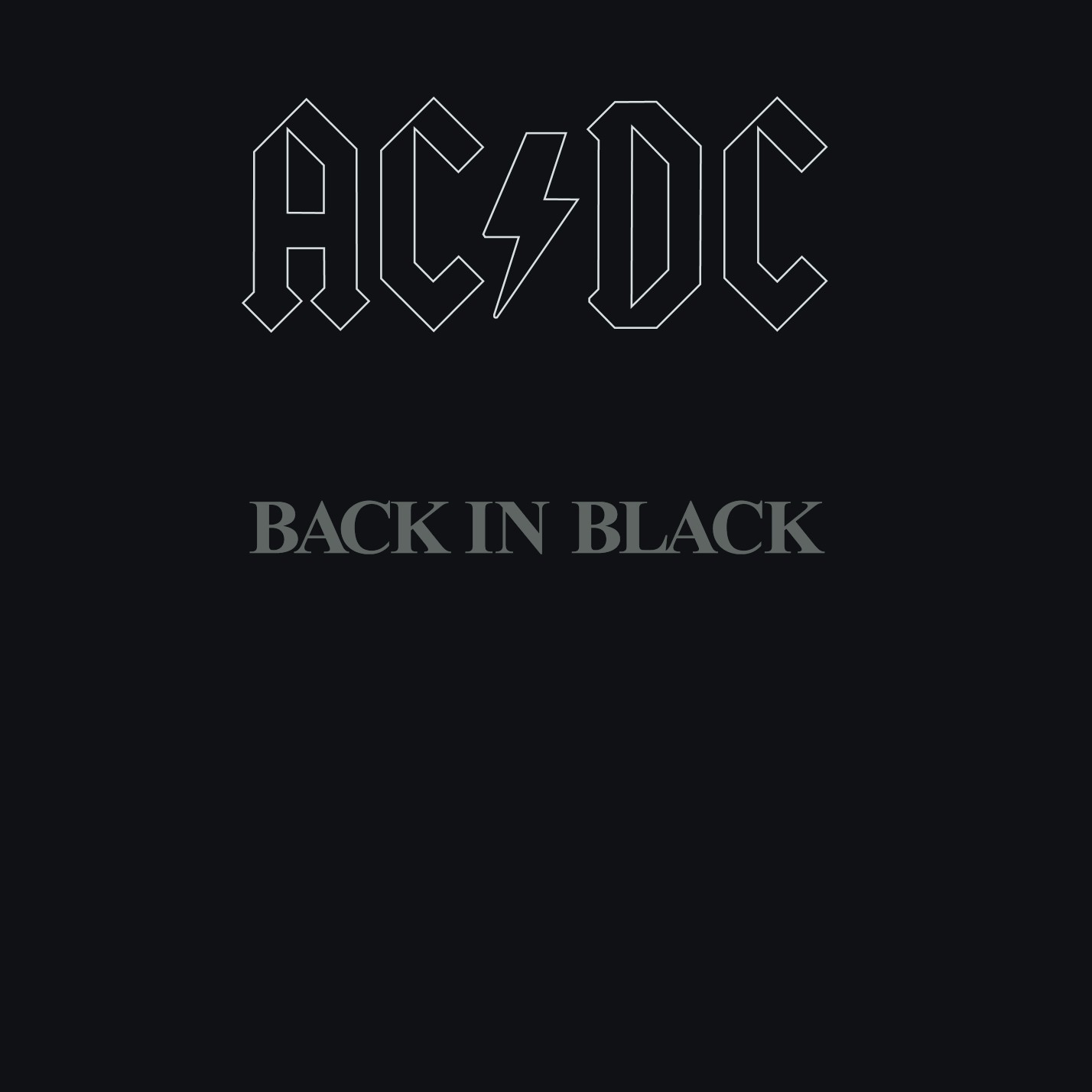
Brian Johnson: vocals Angus Young: lead and rhythm guitar Malcolm Young: rhythm guitar, vocals Cliff Williams: bass, vocals Phil Rudd: drums ‘Mutt’ Lange: production, backing vocals
1980 was when AC/DC recorded their second album with Robert John ‘Mutt’ Lange producing. Back In Black would smash AC/DC firmly into the premier league of rock bands and concert attractions and is one of the very biggest selling albums of all time. But it also came in the wake of the death of singer Bon Scott. That the album should be so well received and their best with Brian Johnson, even perhaps their best full-stop, is incredible.
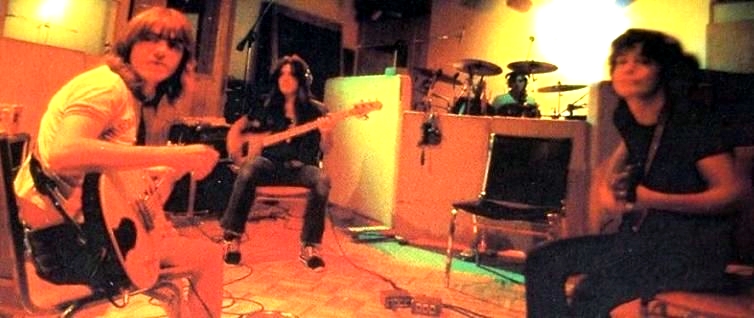
Back in February 1980 it had seemed like business usual. Angus and Malcolm had the bare bones of at least two songs – Have A Drink On Me and Let Me Put My Love Into You. They worked these up at E-Zee Hire Studios at 6 Hazlitt Mews in Kensington, London. Bon turned up and played drums in what turned out to be his last session with the Youngs. Angus was asked by Total Guitar (2020) if Bon had contributed to the writing of the album. He said: ‘Bon wrote a little of the stuff a week before he died. We started writing the music with Bon on drums. He was a drummer originally. He’d bang away while me and Malcolm worked out the riffs.’
Bon’s death, on February 19 1980 in East Dulwich, London from alcohol poisoning, was a shock but not a surprise. Former band manager Michael Browning’s view is that, ‘He drank a lot and there’s been speculation of other things around his death, but I don’t think so. I think he was just into recreational party stuff. He lived for the moment, and that’s how he lived his life. He would always make the comment that he wanted to be a good-looking corpse.’ The band’s then very new manager, Peter Mensch, grimly told the Sunday Times (October 2012) that his first job as manager was identifying Bon’s body in the morgue.
The funeral was held in Fremantle, Australia on March 1. Angus and Malcolm spent some time before and after it with Bon’s parents. Angus told Classic Rock (2005): ‘I remember Bon’s dad saying to Malcolm and me: ‘You must continue with AC/DC. You’re young guys, you’re on the brink of major success and you can’t afford to give up now.’ But, I’ll be honest with you, we weren’t really listening; we were so wrapped up in our own grief.’
Choosing the right vocalist wasn’t easy. Auditions were held in March 1980 at E-Zee Hire. Definitely a possible was Slade’s gravel-voiced Noddy Holder. He confirmed the story to Planet Rock (2020): ‘I think they probably heard that Slade was sort of on the verge of breaking up and I was approached to join them. I said I’d turn it down, you know, I still got it in my head that Slade was still a force to be reckoned with and that we’d still be carrying on. But I would have turned it down anyway because Slade was my baby.’ Terry Wilson-Slesser, was another candidate. The Youngs knew him from AC/DC gigs supporting his band Back Street Crawler.
Then, from Australia, there was Jimmy Barnes, John Swan and, best of all, Stevie Wright (ex. Easybeats) – someone well-known to the Youngs via their elder brother George. Also known was Wright’s issues with drugs. There was another Aussie who got close to the job. Browning says: ‘There was a guy called Allan Fryer, who I ended up managing in a band called Heaven. He was touted as being a potential replacement. The furthest he got was an audition with Vanda and Young in Sydney. They liked him, but the band had their hearts set on Brian Johnson.’ Fryer, at that time, was the lead vocalist with Aussie band Fat Lip.
Back with UK candidates, the former Heavy Metal Kids singer Gary Holton would have been a great fit, but his issues with alcohol and substance abuse ruled him out. Another who came close was Steve ‘Burtie’ Burton, a roadie from Birmingham who was recommended by AC/DC’s crew. Burton did get to audition but lost out to Brian Johnson. Burton told Rock Candy (2021): ‘I must have made an impression on the band because soon afterwards, I got a call asking if I’d be interested in working with Angus and Malcolm Young’s nephew Stevie. He was putting a new band together in Birmingham, and Malcolm had told him he should get hold of me.’ That band was Starfighters, who supported AC/DC on the UK leg of the Back In Black tour.
Brian Johnson, former lead vocalist with glam-rock band Geordie (but then singer in Geordie II), was in Newcastle living with his parents in 1980. Now aged 32, he felt his chance of the big-time was long gone. By day he made a living from repairing vinyl roofs of classic cars while keeping his hand in recording vocals for TV commercials. The call to audition for AC/DC was a complete, and welcome, shock. He recalled, in his first ‘autobiography’ (Rockers And Rollers), what happened when he arrived: ‘In the rehearsal room sat the boys of AC/DC, looking quite bored. They’d been auditioning singers for a month. When I walked in, I introduced myself and Malcolm said, ‘Ah, you’re the Newcastle lad’, and promptly gave me a bottle of Newcastle Brown Ale. He said, ‘Well, what do you wanna sing?’ I told him Nutbush City Limits by Tina Turner.’ That surprised the band and, with everyone now warmed up, they blasted through Whole Lotta Rosie and Highway To Hell. Job done, Brian was duly called back for a second audition.
He was asked to come up with some lyrics for Given The Dog A Bone for this audition. This fact is not often mentioned, but it indicates that Brian could write lyrics under pressure. A front-man who could contribute to the writing was a vital part of the role. Many accounts give the impression that the lyric writing was dropped on Brian when they commenced the Back In Black recording sessions, but Malcolm and Angus would also have had ideas in advance.

Brian got the job in March 1980 and was officially announced, ironically, as the new vocalist on April 1. A week or so later, he was on his way to Compass Point Studios in the Bahamas to work on the album! The rest of the band were waiting and had started work on the backing tracks.
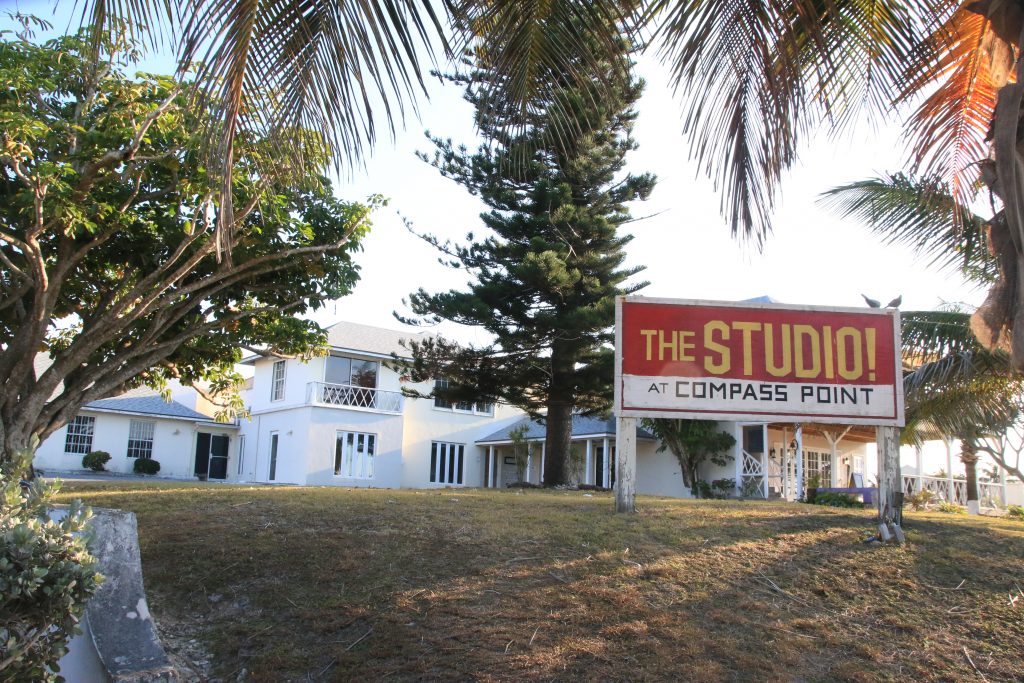
Smoothing over the transition was Lange whose stellar work had helped Highway To Hell to break big, particularly in America. He would go on to produce the next album, For Those About To Rock, too.
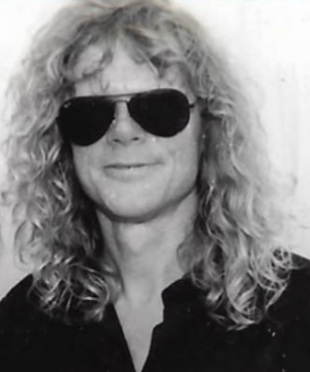
While it was still an immensely difficult time for the band, the man with the hardest job was Brian. He was thrown into recording with scarcely any notice. While he had the chops and confidence to handle the vocals, he must have been concerned with the timescale in which to come up with the lyrics – in spite of having managed Given The Dog A Bone already. His credits for lyrics with Geordie, says he wrote (or co-wrote) just nine songs over four albums. So he could do it (kind of) and there is no doubt that Angus, Malcolm and Mutt Lange had input as well. Browning, for example, opines: ‘I would think Back In Black might have been Malcolm’s title. Malcolm used to come up with song titles and riffs and then Bon would get involved, so I think he would have done that too with Brian.’ In addition it’s well known that Lange’s contributions to the arranging and song-writing were huge.
The big question is whether Bon’s oft-reported notebook of ideas was ‘made available’ too. The late journalist Malcolm Dome said in Classic Rock (2005) that he saw at least one line from the album in Bon’s notebook: ‘Bon proudly showed me some scribbles he’d put down in preparation for an album he felt would define AC/DC, and open up new possibilities. It’s hard to be absolutely accurate from a distance of a quarter of a century, and through the haze of alcohol which enveloped the night, but one line sticks in my mind as being on one of those sheets: ‘She told me to come, but I was already there.’ It’s one of the best lines on the album, and features in You Shook Me All Night Long along with the lyrics at the top of this piece.
Angus effectively substantiated the existence of those notes in his July 2008 interview with Guitar World: ‘(Bon) was actually supposed to come in that same week he died. He had this pile of lyrics he’d been kicking about and he said, ‘Well, maybe I could come in and try out some ideas.’’ If the ‘pile of lyrics’ were found in Bon’s flat, Angus insisted in a fan Q&A on Reddit (2014) that ‘Anything he left went back to his family. Any notes he had ever left, or messages. Anything that was there that was his all went to his family’. The question remains whether they were looked at first and used.
In the same interview Angus revealed: ‘Some stuff, like Hells Bells, was obviously written with Bon in mind, but then a lot of it was written when Bon was still around. I remember during the Highway To Hell tour, Malcolm came in one day and played me a couple of ideas he had knocked down on cassette, and one of them was the main riff for Back In Black. And he said, ‘Look, it’s been bugging me, this track. What do you think?’ He was going to wipe it out and reuse the tape because cassettes were sort of a hard item for us to come by sometimes! I said, ‘Don’t trash it. If you don’t want it, I’ll have it.’
What is undeniable is that AC/DC’s lyrics are simpler and more ‘obvious’ in terms of the rhymes than they were with Bon. Other than You Shook Me All Night Long, there’s nothing that is as ‘clever’ on Back In Black as the best of Bon’s lyrics.
Bon‘s lyrics came from his observations and experiences of life and he covered a lot of emotional territory in them too. He could be a thoughtful writer and he knew how to put a lyric across and stamp his personality on it. The era with Brian generally loses that, the lyrics are less interesting and often seem written to fit a title with little thought other than that. But they serve the song well enough.
The sequencing of the album is ingenious. The four big bangers are Hells Bells and Shoot To Thrill, which open side one, and Back In Black and You Shook Me All Night Long which open side two. That sets up each side with the very best on offer, a clever decision that goes some way to making the album as big as it is. They could, for example, have moved You Shook Me to side one and ‘boosted’ that side, which would have been understandable. The title track is well-placed to open side two and it works as a pun, too: you’ve turned the record over and are back (in black).
The title is perfect and the cover dovetails with it as a tribute to Bon. At the time it was a brave decision for an album that was so key for them. The album was very noticeable in the shops, all in black with the raised lettering. It had a classy look and ‘importance’ to it. But there were clues that it had been made quickly in the packaging. The inner bag features live shots of the four musicians (presumably from the 1979 tours), but there had been no opportunity to get a picture of Brian on stage. Instead, he is standing against a wall at E-Zee Hire Studios, tipping his cap. In a further nod to their most totemic member, Angus is at the centre of the spread and, by far, has the largest photo.
All of the band step up with career-best performances. Angus always stands out because of his press allure, but even so the solos he plays on this album are amongst the best he has ever put together. He explained to Guitar World (July 2008) that: ‘Some were totally off the top, and there were some that I took a bit longer with. With Mutt he’d just listen and tell you when he thought something was great. Sometimes, I’d be there for a whole day doing one guitar solo, and then he’d go, ‘Remember what you were playing at the beginning?’ And I’d have to go all the way back to the start.’
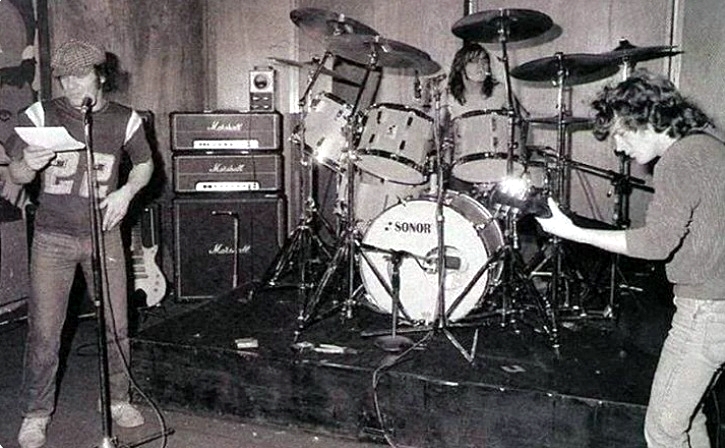
The album must be the most incredible turnaround in a band’s fortunes ever, and it has resulted in it being the second-biggest-selling album of all time. It’s also the best one with Brian, of that there is no doubt. And that must have been something to give them cause to ponder over the years. They have never come close to equalling it, though if I had to pick one it would be For Those About To Rock – the third and final album with Lange in the chair.
But is it better than anything with Bon? That’s a tougher call because the band are such a different beast from Bon to Brian. Yes the elements of AC/DC are there, but the vocal style and performance of the pair make it hard to compare. But when all is said and done, Back In Black really is their best album. Let’s play it through right now . . . .
Hells Bells. Brian has referred to having ‘writer’s block’ during the sessions. Inspiration came to him from the weather. A tropical storm hit Compass Point and Mutt Lange commented on the thunder. ‘Rolling thunder’, said Brian, was what it was called it in Britain. A lightbulb moment and he was off, telling Dan Rather of The Big Interview (AXS TV, 2019) that he ‘literally was giving a weather report.’
Opening with a tolling bell was a brave but powerful tribute to Bon. The plan was to have a two-ton bronze bell, specially cast, which could be used for the recording and then taken on tour. The Taylor Foundry in Loughborough, Leicestershire were approached in April 1980 to manufacture it. Bell master Mike Milsom talked them into a more practical one-ton bell tuned to E. This was to be pitch-corrected to C for the recording.
With time of the essence, it looked as though Taylor might miss the deadline, so they looked at recording the bell in Loughborough’s WW1 Carillon Memorial Tower. They tried recording at night to avoid traffic noise, but there was no way to avoid the noise from the roosting pigeons. Fortunately Taylor managed to make the deadline and the final recording was made at the Foundry. It was Milsom himself who got to ring the bell and make his mark on the album. Live it would be Brian Johnson who struck the bell, but over the years, this was altered so a recording was played instead.
In the song the tolling bell represents a solemn goodbye, but as soon as the band, and especially Brian, come in, this is as much about the present and the future. I vividly remember the first time I heard the song. What struck me quickly was that this was a different AC/DC, not just the song but the band itself. The elements are there from before, but the sound is far more polished and ‘corporate’. It’s also a song that sounds and feels big and stadium ready.
The descending riff by Angus works seamlessly with the tolling bell, and when the rhythm section come in it’s an awesome force of nature. The chorus, with the return of that descending riff, is fabulous. Overall, it’s a stunning song and the studio version reigns supreme. It loses some of its stately potency in live versions because the band tend to up the tempo, blurring some of the passages.
Trivia: The apostrophe is missing from hells, but it looks better as a rhyming couplet without it!
(Watch the official video for Hells Bells).
Shoot To Thrill. It has become one of the big audience favourites from the album and has remained a definite inclusion on setlists – although it wasn’t featured on the Back In Black tour. The twin rhythm playing of the Youngs, the combination of the drawn-out riff from Angus and the choppier one from Malcolm, makes for a great start. What catches your ear quickly is the quirky arrangement, with that rhythm as the basis.
The chorus is supremely catchy, with a melodic riff all of its own. Central to the song’s reputation is the much beloved mid-song breakdown at 3:23, which has become a high point of every live gig. Brian’s ‘play to kill’ cues up the breakdown. Phil is supreme here, keeping that dynamite groove going while Angus takes off for guitar nirvana. It’s one of the very best things AC/DC have ever put together in what is also one of their very best songs.
What Do You Do For Money Honey. A great riff opens this one, with that patent Malcolm Young precision guitar. After the dramatic opening, it settles down into the verse groove, which always feels likes it’s going to head into a great chorus. You can just sense something big is coming. The transition from the verses into the chorus is so smooth and they dial things right up for the chorus, which has those great wall-of-sound backing vocals. Angus’ solo is sublime, especially as he drops away from the high notes down the fretboard.
Given The Dog A Bone. There’s a buzzing confidence about the glorious intro riff that speaks volumes. Four tracks in and the quality hasn’t dropped at all. There’s the briefest cue from Phil as Malcolm’s riff comes in, followed by Angus doubling the riff. This is so damn good, you could pretty much sing anything over it, but Brian (with possible contributions from the Youngs) opts for sexual congress. The unsubtle metaphoric title is abandoned completely in the verses, which make it crystal clear what is taking place with the innuendo. Despite the problematic title – the lyrics, the backing track and Angus’s solo are terrific, and you can’t fault Brian’s enthusiastic performance.
Let Me Put My Love Into You. This is an underrated track! The slow, brooding pace has a sad but dramatic tone to it, which is a surprise given the title. This is a welcome example of AC/DC bypassing and surprising your expectations. Full marks too for Brian who shines in one of his best performances ever for AC/DC.
The intro is reminiscent of Hells Bells and gives side one of the album a feel of everything coming full circle. The verses have a stately but musical feel and there’s a great little lick from Angus between Brian’s phrases that connects each verse to the chorus. There’s a restraint still present in the chorus; they don’t go over the top as might be expected from the title. Equally, Angus’s solo (2:37) is an exercise in tasteful restraint, a lyrical and melodic solo that fits the song perfectly. He doesn’t really stop the solo as such; a brief pause and he’s back stretching out over the outro, which is the perfect ensemble ending to a great song.
Back In Black. Malcolm had that riff for about three weeks’, Angus told Classic Rock (2000). He came in one night and said, ‘You got your cassette here? Can I put this down? It’s been driving me mad. I won’t be getting any sleep until I put it on cassette. He sat down and played it all. The funniest thing is, he said to me, ‘What do you think? I don’t know if it’s crap or not.’’ What Malcolm came up with was one of the catchiest big beast riffs ever written, while the song itself is utterly brilliant – a genuine rock classic.
The clipped guitar rhythm and Phil’s hi-hat in the intro set up that titanic riff and the descending lick that tails it back to the top. Brian gets close to rapping the verses, which, combined with that riff, gives the song a real ‘down on the streets’ vibe. There’s a confident arrogance that oozes out of it, so it’s curious that it’s been said to be a tribute to Bon. Nothing about the lyrics has any suggestion of that. Browning concurs, ‘When I heard the track it said to me that it was the band’s statement: ‘we’re out of debt.’’
The song uses the same trick as on Highway To Hell of keeping the backing track minimal in the verses and pushing everything into the chorus for maximum effect. Lyrically, it’s one of the most minimal choruses they have ever done, but it’s an absolute monster. Angus pulls off two great solos; the first (1:48) weaves around the rhythm expertly. A series of descending riffs at 2:50 cue up the outro, which features the second solo (3:30), where Angus goes walkabout on his fretboard for a jubilant, melodic solo.
Trivia: My youngest daughter says you can’t walk along listening to this song and not feel empowered and positive.
(Watch the official video of Back In Black.)
You Shook Me All Night Long. It’s one of their greatest songs, an absolute banger, and arguably their biggest hit with a wider audience. Brian’s lyrical inspiration, he has often said, came from watching TV while they were recording the album. Two American ladies ‘caught his attention’ and he got writing.
Now, it’s definitely a high point of his lyrics portfolio, but, as I mentioned earlier, it’s also the song that has attracted the most suspicion in terms of who wrote it. Brian explained the song’s origins to Absolute Radio (2021): ‘Malcolm and Angus said, ‘Listen, we’ve got this song. It’s called Shook Me All Night Long. That’s what we want the song to be called.’’ And if you listen to the chords, it (the chorus) just fell into place, so I can’t claim any credit on that thing.’ Brian continued: ‘I still think it’s one of the greatest rock ‘n’ roll riffs I’ve ever heard in my life.’
The song opens with a twangy, melodic riff, which has a second guitar part harmonising with it. Phil’s drums shatter that and cue in the song’s main riff, a staccato catchy thing of wonder! Phil is amazing at this point, just him, Malcolm and then Brian. Verse two sees Angus come in to harmonise on the riff and then, finally, Cliff enters in the chorus. That chorus has it all – a pop/rock crossover and a catchy tune that you can’t forget. The backing vocals here are interesting because they sound more raucous and less refined than you might expect. All this and a killer solo from Angus to seal the deal.
(Watch the official video for You Shook Me All Night Long)
Have A Drink On Me. It’s hard not to think of Bon in terms of the title and the lyrics, and that feels a little awkward, given the manner of his death. Yet, the band, and probably Bon, would argue this is what he would have laughed at and wanted from the band.
A stinging, bluesy intro riff is swept away by the band coming in on the riff. The verses work well with the rhythm guitar cushioning Brian’s vocals. They don’t waste time in getting to the chorus but it’s less effective as it doesn’t do much more than the verses. The star of this song is Brian, who delivers the lyrics with real gusto. It’s a big performance from him, showcasing his range and delivery. The outro, with everyone on full throttle, is the best part of the song and a real wall of noise. It’s still, though, one of the less amazing songs on the album.
Shake A Leg. Magic right from the intro, with Phil just behind the beat against Cliff and Malcolm’s rhythm. In comes Brian and the open spaces in the rhythm allow his voice to stand out. The first verse is a coiled spring waiting for the music to let go, which it finally does at 0:33 with Brian’s cry of ‘Don’t kick don’t fight don’t sleep at night, and shake a leg’. Ten seconds later, after some stabbing riffs and an increasingly excited Brian, we are off. Phil’s turnaround on the kit cues the wild and crazy riff that the song is well-known for. The solo comes in at 2:26 over a detour from the main riff, winding up with blisteringly fast notes.
Trivia: The lyrics (1:59) ‘stop your grinnin’ and drop your linen’ are spoken by Bill Paxton (as Private Hudson) in Aliens during the scene where he locates the colonists’ transmitters.
Rock And Roll Ain’t Noise Pollution. This was the last track recorded for the album, and it feels like a final farewell to Bon. Under pressure to finish the album, Malcolm apparently came up with the bones of the song in just 15 minutes. For me it’s the closest they get to a filler track. It starts off great – Brian nails the intro completely, getting across a genuine warmth as he lights up and extemporises while Angus and Phil accompany him. The crash-in of the full band and those twin rhythm guitars hit hard, but I find the verses a little pedestrian in spite of the music, and the chorus doesn’t give me a lift.
Fundamentally it’s the title that lets it down. You hear it a lot, as you expect to in any AC/DC song, but it hasn’t got enough weight or even gravitas. It’s not a bad song, but I don’t think it was good enough. However, Atlantic liked it enough to make it the third single from the album.
Conclusion
Angus was asked by Guitar World (July 2008) why he thought the album had connected with so many people: ‘At the time, I suppose there was a lot of curiosity. The fans were buying it because they were eager to see how it would be different from what they knew. And then the songs themselves were special. When we were in the studio, we were thinking it could be our last record, so that was a big push.’
‘When you lose somebody like Bon, who’s a very upfront guy, he was the identity of the band for a lot of people. We didn’t know if we could get past that. We knew we had good songs, but even so, you can have great songs, but at the end of the day, people can still go, ‘Yeah, whatever.’
The band unquestionably did get it right with Brian. He ticked all the boxes for what they needed – vocal prowess, easy-going, big personality, able to write – he fitted in. What he didn’t have was Bon’s unique way with a phrase and he didn’t have as nuanced a delivery as Bon. But with the songs they were now writing, these elements didn’t matter quite so much.
Michael Browning’s view is that ‘Back In Black will go down in history as probably the best rock record ever made. It’s quite phenomenal. It caught everyone by surprise.’ It certainly did!
(This piece is edited and revised from the section in my book AC/DC: Every Album, Every Song)